
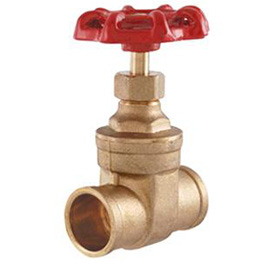
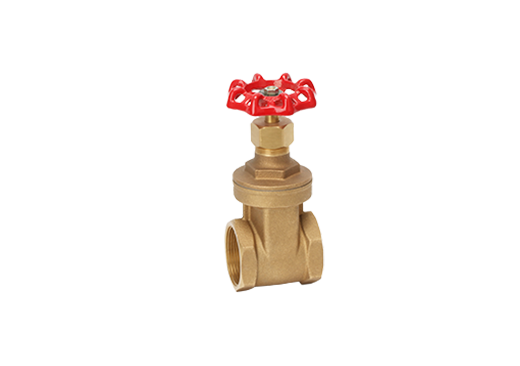

Bronze Globe Valve vs Brass Globe Valve: Complete Comparison Guide
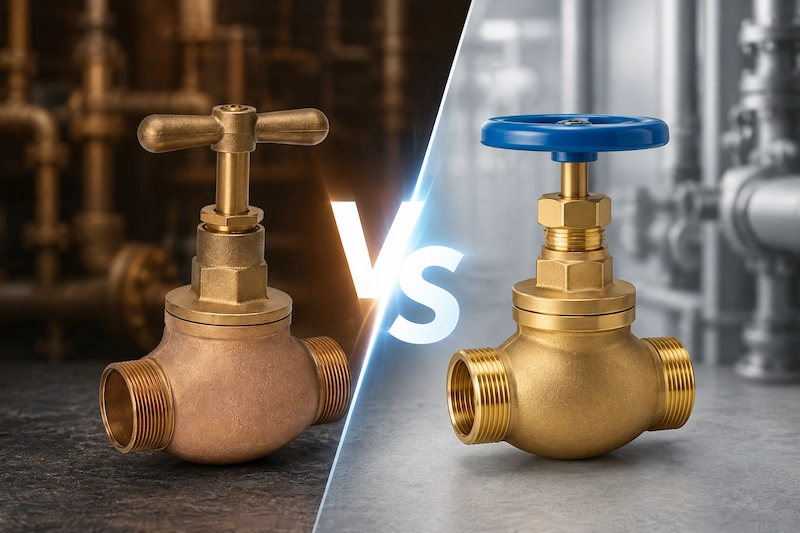
Selecting the right globe valve material is just as important as selecting the correct valve design. While bronze and brass globe valves may look similar at first glance, their performance characteristics, durability, corrosion resistance, and application suitability can vary significantly.
For most commercial plumbing and general water applications, brass globe valves provide an economical and reliable solution. However, for marine environments, industrial systems, higher durability requirements, and long-term service applications, bronze globe valves are often the preferred choice.
This guide compares bronze and brass globe valves from an engineering, procurement, and operational perspective to help buyers, contractors, distributors, and project managers make informed decisions.
What Is a Globe Valve?
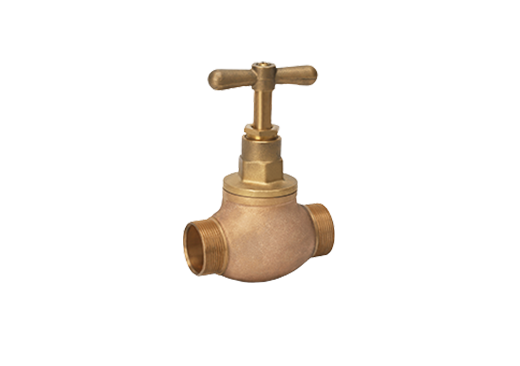
A globe valve is a linear-motion valve designed to regulate, throttle, or completely stop fluid flow.
Unlike ball valves, which are primarily used for on/off service, globe valves provide precise flow control.
Common applications include:
Water supply systems
Steam systems
HVAC installations
Fire protection networks
Marine piping systems
Industrial processing lines
Oil and gas auxiliary systems
Because the valve body is continuously exposed to flowing media, material selection has a direct impact on reliability and lifespan.
Bronze Globe Valve vs Brass Globe Valve: Quick Comparison
| Feature | Bronze Globe Valve | Brass Globe Valve |
|---|---|---|
| Corrosion Resistance | Excellent | Good |
| Strength | Higher | Moderate |
| Marine Applications | Excellent | Limited |
| Freshwater Systems | Excellent | Excellent |
| Cost | Higher | Lower |
| Service Life | Longer | Good |
| Wear Resistance | Better | Good |
| Machinability | Moderate | Excellent |
| Industrial Use | Preferred | General Purpose |
| Maintenance Requirements | Lower | Moderate |
Understanding Bronze Globe Valves
Bronze valves are typically manufactured using copper-based alloys containing tin and other elements.
Bronze has been widely used in industrial piping systems for decades because of its:
Excellent corrosion resistance
High mechanical strength
Superior wear resistance
Long service life
Good performance in seawater environments
Many marine engineers consider bronze one of the most reliable valve materials for long-term operation.
A reputable bronze globe valve supplier will often recommend bronze valves for demanding environments where durability is a priority.
Understanding Brass Globe Valves
Brass is a copper-zinc alloy widely used throughout plumbing and water distribution industries.
Brass globe valves offer:
Lower purchase cost
Good corrosion resistance
Easy machining
Wide availability
Simple maintenance
Because brass is easier to manufacture, it is commonly found in residential, commercial, and light industrial systems.
Material Composition Differences
The key distinction between the two materials lies in their alloy composition.
| Material | Main Elements |
|---|---|
| Brass | Copper + Zinc |
| Bronze | Copper + Tin + Other Elements |
This difference significantly affects:
Corrosion resistance
Mechanical strength
Wear resistance
Service life
Bronze generally performs better under demanding operating conditions.
Corrosion Resistance Comparison
Bronze Globe Valves
Bronze naturally develops a protective surface layer that helps resist corrosion.
This makes bronze particularly suitable for:
Seawater systems
Coastal environments
Industrial water treatment
Cooling water systems
Shipbuilding applications
Bronze is also highly resistant to dezincification because it contains little or no zinc.
Brass Globe Valves
Brass performs very well in standard freshwater applications.
Typical installations include:
Building plumbing
HVAC systems
Municipal water networks
Irrigation systems
However, prolonged exposure to aggressive water conditions may increase the risk of dezincification in some brass alloys.
Winner: Bronze
Strength and Durability
Many buyers assume brass and bronze have similar strength levels.
In reality, bronze often provides:
Higher tensile strength
Better fatigue resistance
Greater wear resistance
Improved long-term reliability
This is especially important in systems involving:
Frequent operation
Elevated temperatures
Pressure fluctuations
Continuous service
Winner: Bronze
Performance in Marine Applications
Marine environments are among the most challenging conditions for valves.
Saltwater exposure can rapidly accelerate corrosion.
Bronze globe valves are widely used in:
Shipbuilding
Offshore platforms
Seawater cooling systems
Port facilities
Desalination plants
Brass valves generally have a shorter service life under these conditions.
Winner: Bronze
Cost Comparison
Initial purchase price remains a major factor for many projects.
| Valve Type | Relative Cost |
|---|---|
| Brass Globe Valve | Lower |
| Bronze Globe Valve | Higher |
The price difference varies according to:
Valve size
Pressure class
Certification requirements
Manufacturing origin
For large projects involving hundreds of valves, material selection can significantly impact budgets.
Winner: Brass
Service Life Comparison
When properly installed and maintained:
Brass Globe Valve
Expected service life:
10–20 years in standard water systems
Bronze Globe Valve
Expected service life:
15–30 years or longer in many applications
The actual lifespan depends on:
Water quality
Operating pressure
Temperature
Maintenance practices
Winner: Bronze
Which Valve Is Better for Steam Systems?
Steam systems place greater demands on valve materials due to:
High temperatures
Thermal cycling
Pressure fluctuations
Bronze generally performs better in low- and medium-pressure steam applications because of its superior strength and durability.
For steam service, many engineers prefer bronze whenever budget allows.
Winner: Bronze
Installation and Maintenance Considerations
Brass Globe Valves
Advantages:
Easier to source
Lower replacement cost
Widely available spare parts
Suitable for routine maintenance programs
Bronze Globe Valves
Advantages:
Longer maintenance intervals
Better wear resistance
Lower lifecycle replacement costs
In critical facilities where downtime is expensive, bronze often delivers better long-term value.
Best Applications for Brass Globe Valves
Brass globe valves are commonly recommended for:
Residential plumbing
Commercial buildings
Municipal water systems
Irrigation systems
HVAC installations
General-purpose flow control
When cost efficiency is important and operating conditions are moderate, brass is often the most practical solution.
Best Applications for Bronze Globe Valves
Bronze globe valves are typically preferred for:
Marine systems
Shipbuilding projects
Seawater pipelines
Industrial processing facilities
Cooling water systems
Steam applications
High-cycle operations
A professional bronze globe valve factory often focuses on these demanding sectors because customers prioritize reliability over initial cost.
How to Choose Between Bronze and Brass Globe Valves
Consider the following questions before purchasing.
What Fluid Is Being Controlled?
Freshwater generally works well with either material.
Saltwater and corrosive fluids usually favor bronze.
What Is the Expected Service Life?
For long-term infrastructure projects, bronze may offer lower lifecycle costs.
Is Initial Cost the Main Concern?
Brass usually provides the most economical solution.
Is the System Located Near the Coast?
Bronze often performs better in coastal environments.
How Critical Is Downtime?
For mission-critical systems, bronze's durability can justify the higher investment.
Common Purchasing Mistakes
Selecting Based Only on Price
The cheapest valve may not deliver the lowest total ownership cost.
Ignoring Environmental Conditions
Marine and industrial environments can significantly shorten the lifespan of brass valves.
Over-Specifying Bronze for Standard Plumbing
In ordinary freshwater applications, brass may provide all the performance required at a lower cost.
Failing to Consider Lifecycle Costs
Replacement labor, downtime, and maintenance expenses can exceed the initial valve cost over time.
Frequently Asked Questions
Is bronze better than brass for globe valves?
In terms of corrosion resistance, durability, and marine performance, bronze is generally superior. Brass remains an excellent choice for many standard water applications.
Why are bronze globe valves more expensive?
Bronze alloys typically contain more costly materials and require more complex manufacturing processes, resulting in higher production costs.
Can brass globe valves be used for seawater?
While some brass alloys can tolerate limited seawater exposure, bronze is generally the preferred material for long-term marine service.
Which valve lasts longer?
Bronze globe valves typically provide a longer service life, particularly in demanding environments.
Is bronze worth the additional investment?
For marine, industrial, and critical infrastructure applications, the extended service life and improved reliability often justify the higher upfront cost.
Final Recommendation
The choice between a bronze globe valve and a brass globe valve depends on operating conditions, budget, and long-term performance requirements.
If your application involves residential plumbing, commercial water systems, HVAC installations, or general-purpose flow control, a brass globe valve usually offers the best balance of performance and cost.
If your system operates in marine environments, industrial facilities, steam applications, or corrosive conditions, a bronze globe valve is typically the better investment. Its superior corrosion resistance, durability, and extended service life can significantly reduce maintenance costs and downtime over the life of the system.
When sourcing valves for critical projects, working with an experienced bronze globe valve supplier or established bronze globe valve factory can help ensure compliance, product quality, and long-term operational reliability.
Different Carbo Valves For Sale
