
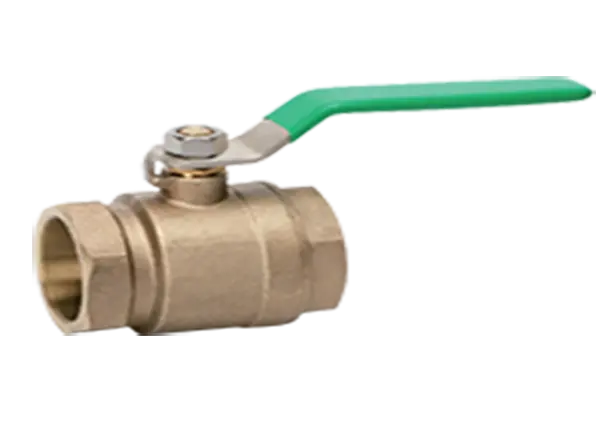
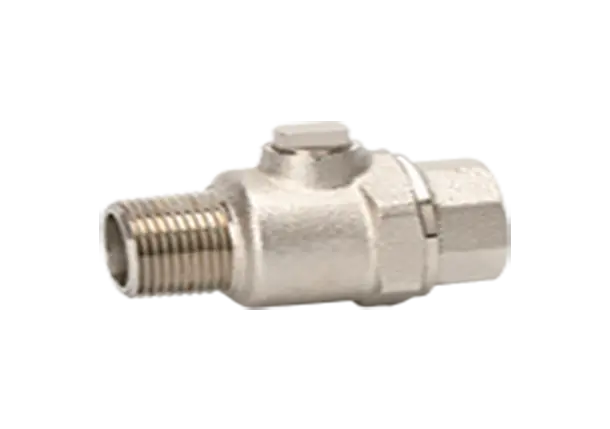
Brass Ball Valve Sizes Guide: Complete Sizing Chart from 1/4' to 4'
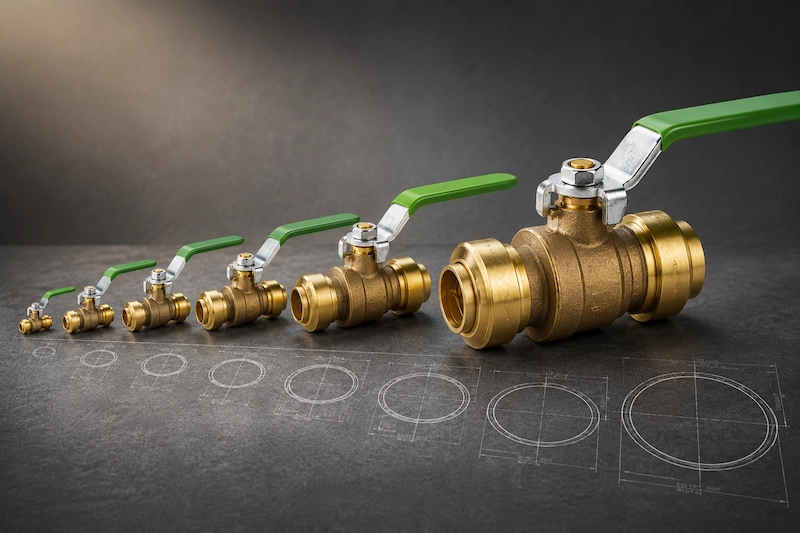
Selecting the correct brass ball valve size is one of the most important decisions when designing or maintaining a piping system. An undersized valve can restrict flow and create pressure losses, while an oversized valve may increase costs unnecessarily and complicate installation.
Brass ball valves are available in a wide range of sizes, typically from 1/4 inch to 4 inches, covering everything from small instrument lines to large commercial and industrial water systems. Understanding how each size is used and how to select the appropriate valve can help improve system performance, reduce maintenance costs, and avoid costly design mistakes.
This guide provides a complete brass ball valve sizing chart, explains common applications for each size, and offers practical recommendations for buyers, engineers, contractors, and distributors.
Why Brass Ball Valve Size Matters
Many buyers focus on pressure ratings, connection types, or material certifications while overlooking sizing.
However, valve size directly affects:
Flow capacity
Pressure drop
System efficiency
Pump performance
Water velocity
Installation costA properly sized valve ensures that the system operates efficiently while maintaining reliable shut-off performance.
Standard Brass Ball Valve Size Chart
The following chart summarizes the most common brass ball valve sizes and their typical applications.
| Valve Size | DN Size | Typical Applications |
|---|---|---|
| 1/4" | DN8 | Instrumentation, gauges, air lines |
| 3/8" | DN10 | Small pneumatic systems, water dispensers |
| 1/2" | DN15 | Residential plumbing, fixtures |
| 3/4" | DN20 | Home water supply branches |
| 1" | DN25 | Main residential supply lines |
| 1-1/4" | DN32 | Small commercial systems |
| 1-1/2" | DN40 | HVAC and commercial piping |
| 2" | DN50 | Industrial water distribution |
| 2-1/2" | DN65 | Large commercial facilities |
| 3" | DN80 | Industrial process systems |
| 4" | DN100 | Municipal and large industrial applications |
Understanding Nominal Pipe Size (NPS) and DN
When purchasing valves internationally, buyers often encounter two sizing systems.
NPS (Nominal Pipe Size)
Commonly used in:
United States
Canada
Some Middle Eastern markets
Examples:
1/2"
1"
2"
4"
DN (Diameter Nominal)
Commonly used in:
Europe
Asia
International projects
Examples:
DN15
DN25
DN50
DN100
Quick Conversion Table
| NPS | DN |
|---|---|
| 1/4" | DN8 |
| 3/8" | DN10 |
| 1/2" | DN15 |
| 3/4" | DN20 |
| 1" | DN25 |
| 1-1/4" | DN32 |
| 1-1/2" | DN40 |
| 2" | DN50 |
| 2-1/2" | DN65 |
| 3" | DN80 |
| 4" | DN100 |
Common Applications by Valve Size
1/4" Brass Ball Valve
The smallest commonly available size.
Typical uses:
Pressure gauges
Instrument lines
Air compressors
Sampling systems
Laboratory equipment
Advantages:
Compact design
Easy installation
Low cost
3/8" Brass Ball Valve
Frequently used in:
Water dispensers
Small air systems
Coffee machines
Beverage equipment
Pneumatic control systems
Suitable where moderate flow rates are required.
1/2" Brass Ball Valve
One of the most widely used sizes worldwide.
Applications include:
Bathroom fixtures
Kitchen plumbing
Water heaters
Residential branch lines
Irrigation systems
For many homeowners and contractors, 1/2" is the default choice for fixture connections.
3/4" Brass Ball Valve
Typically installed in:
Residential water distribution systems
Garden irrigation
Small pump systems
Light commercial plumbing
Provides higher flow capacity than 1/2" valves while remaining compact.
1" Brass Ball Valve
Common uses include:
Main water supply lines
Commercial buildings
Booster pump systems
Water treatment equipment
This size often serves as the transition point between residential and commercial applications.
1-1/4" to 2" Brass Ball Valves
These sizes are frequently found in:
HVAC systems
Commercial facilities
Fire protection systems
Industrial water distribution
Benefits include:
Higher flow rates
Reduced pressure losses
Improved system efficiency
2-1/2" to 4" Brass Ball Valves
Typically used in:
Large commercial buildings
Industrial plants
Municipal infrastructure
Process water systems
These larger valves require careful sizing to avoid unnecessary costs.
Full Port vs Reduced Port: Why It Affects Sizing
Size selection involves more than connection diameter.
Brass ball valves are generally available in two configurations.
Full Port Ball Valves
The internal bore matches the pipe diameter.
Advantages:
Maximum flow
Minimal pressure drop
Better pump efficiency
Best for:
Water systems
Industrial applications
High-flow installations
Reduced Port Ball Valves
The internal opening is smaller than the pipe diameter.
Advantages:
Lower cost
Smaller size
Reduced weight
Best for:
Utility service
General shut-off applications
When sizing valves, buyers should verify whether the valve is full port or reduced port, as this affects actual flow performance.
How to Select the Correct Brass Ball Valve Size
Step 1: Determine Pipe Size
In most systems, valve size matches pipe size.
Examples:
1" pipe → 1" valve
2" pipe → 2" valve
However, special flow requirements may require different sizing strategies.
Step 2: Calculate Flow Requirements
Consider:
Required flow rate
Peak demand
Pressure conditions
Future expansion
Large facilities often experience significant demand fluctuations.
Selecting the correct valve size ensures stable system performance.
Step 3: Check Pressure Drop Requirements
An undersized valve can cause:
Reduced flow
Pump inefficiency
Energy waste
Equipment performance issues
Pressure drop calculations are particularly important in commercial and industrial systems.
Step 4: Verify Connection Type
Common connection options include:
Female threaded
Male threaded
Flanged
Press-fit
Solder end
The connection method should align with the existing piping system.
Brass Ball Valve Sizing for Different Industries
Residential Plumbing
Most common sizes:
1/2"
3/4"
1"
Applications:
Water supply lines
Fixtures
Water heaters
HVAC Systems
Most common sizes:
1"
1-1/4"
1-1/2"
2"
Applications:
Chilled water
Heating systems
Cooling loops
Commercial Buildings
Most common sizes:
1"
2"
3"
Applications:
Water distribution
Mechanical rooms
Utility systems
Industrial Facilities
Most common sizes:
2"
3"
4"
Applications:
Process water
Cooling systems
Manufacturing operations
Common Sizing Mistakes Buyers Make
Choosing a Valve Based Only on Pipe Diameter
Flow requirements should also be evaluated.
Ignoring Full Port vs Reduced Port Design
Two valves with the same connection size can have different flow capacities.
Oversizing the Valve
Larger valves cost more and may offer no practical benefit.
Failing to Consider Future Expansion
System growth may justify selecting a slightly larger valve size.
Overlooking Pressure Loss Calculations
Pressure drop can significantly impact system performance and operating costs.
Questions to Ask a Brass Ball Valve Factory Before Purchasing
Before placing an order, buyers should verify:
Is the valve full port or reduced port?
What pressure rating does it carry?
Which brass alloy is used?
Is the valve certified for potable water?
What testing standards are followed?
Are custom sizes available?
What is the lead time for bulk orders?
A reputable brass ball valve factory should be able to provide technical data sheets, pressure ratings, certifications, and application guidance.
Frequently Asked Questions
What is the most common brass ball valve size?
The most commonly used sizes are 1/2", 3/4", and 1", particularly in residential and commercial plumbing systems.
Can I use a larger ball valve than my pipe size?
In some situations, yes. However, oversizing may increase costs without providing significant performance benefits.
What size brass ball valve is used for residential water mains?
Many residential water mains use 3/4" or 1" brass ball valves, depending on local plumbing requirements and household demand.
Are full port ball valves better?
For most water and industrial systems, full port valves provide superior flow characteristics and lower pressure losses.
What is the largest standard brass ball valve size?
Most manufacturers offer brass ball valves up to 4 inches, although larger sizes may be available for specialized applications.
Final Recommendation
Choosing the correct brass ball valve size involves more than simply matching the valve to the pipe diameter. Flow requirements, pressure conditions, system expansion plans, and valve design all influence performance.
For residential plumbing, 1/2", 3/4", and 1" valves account for the majority of installations. Commercial facilities commonly use 1" to 3" valves, while industrial and infrastructure projects frequently require 2" to 4" sizes.
When sourcing valves, work with an experienced brass ball valve factory that can provide accurate sizing recommendations, certified products, and technical support. Selecting the right size from the beginning helps maximize efficiency, reduce maintenance costs, and ensure long-term system reliability.
Different Carbo Valves For Sale
